
One port, one JAR
The built frontend goes inside the JAR, next to your API. Works with jar, Shadow and Ktor's buildFatJar. No CORS, no second server, no Node in production.
Deploy it
Write your API in Ktor and your pages in SvelteKit. Call every route from Svelte with full types, develop with hot reload on one port, and ship it all as a single JAR.
Write a route in Kotlin and save. Call it from Svelte, with the types, the field limits and the errors already there.
@Serializable
data class NoteInput(
    @JsonSchema.MinLength(1)
    @JsonSchema.MaxLength(80)
    val title: String,
)

fun Route.noteRoutes(notes: MutableList<Note>) {
    route("/api/notes") {
        get {
            call.respond(notes.toList())
        }
        post {
            val input = call.receive<NoteInput>()
            val note = Note(id = notes.size + 1, title = input.title)
            notes += note
            call.respond(HttpStatusCode.Created, note)
        }
    }
}<script lang="ts">
import { api, isValidationError, type Note } from '#api';
let notes = $state<Note[]>([]);
let title = $state('');
let errors = $state<Record<string, string[]>>({});
$effect(() => {
api.notes.list().then((list) => (notes = list));
});
async function add(event: SubmitEvent) {
event.preventDefault();
try {
await api.notes.create({ title });
notes = await api.notes.list();
title = '';
errors = {};
} catch (error) {
if (!isValidationError(error)) throw error;
errors = error.body.fields;
}
}
</script>
<form onsubmit={add}>
<input bind:value={title} placeholder="Title" />
{#each errors.title ?? [] as message}
<p>{message}</p>
{/each}
<button type="submit">Add</button>
</form>
<ul>
{#each notes as note (note.id)}
<li>{note.title}</li>
{/each}
</ul>api.notes.list() returns Note[], api.notes.create only takes a NoteInput, and a title that breaks the limits comes back as a field error. Rename title in Kotlin, and svelte-check points at every line that needs to change. The tutorial builds this app step by step.
build.gradle.kts../gradlew check fails when the committed client or the generated frontend files are out of date.Every feature, grouped and linked, is on Everything ktor-svelte does. What the last major release brought is in New in 1.0.
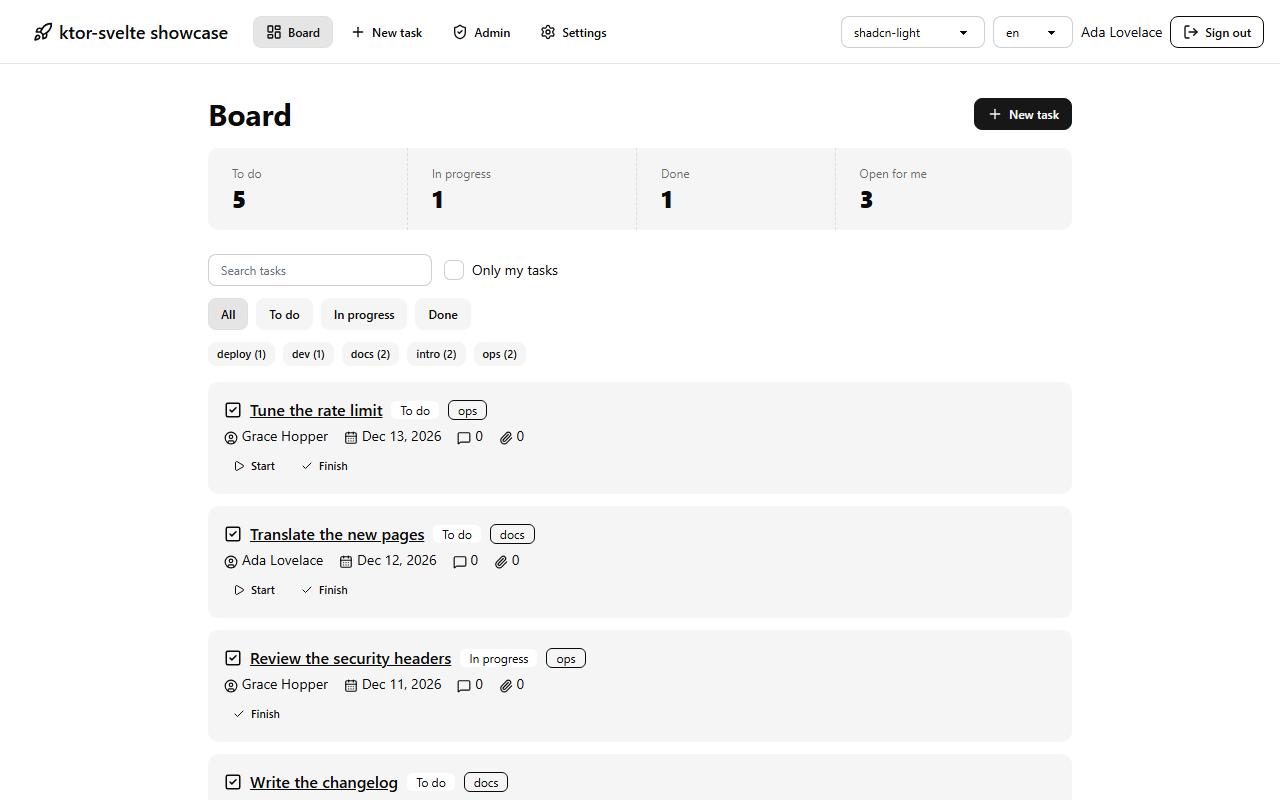
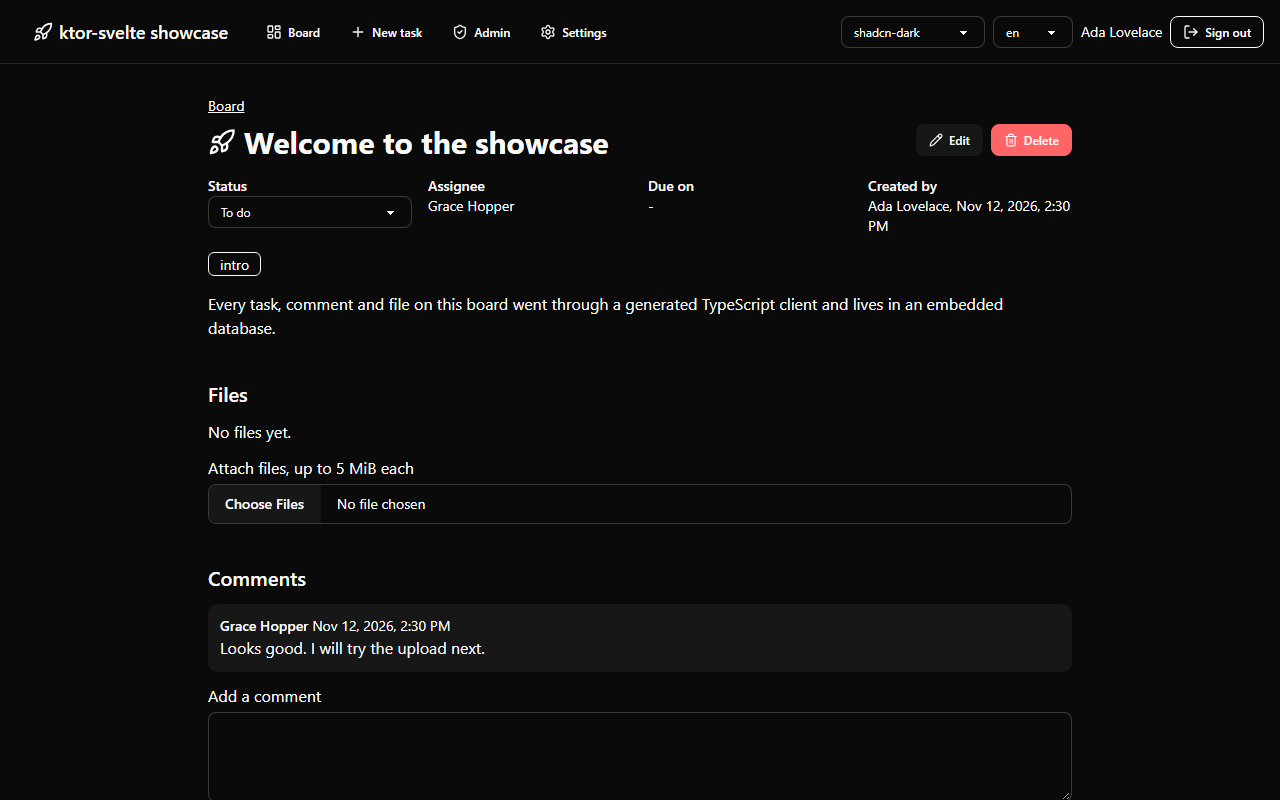
The showcase example is a team board with sign in, roles, a database, file uploads, search and two languages. These are pictures of its production JAR: one process that serves the pages and the API.
A task in the dark theme, with its files and comments:
The admin area in German and in a custom theme, both set from Gradle:
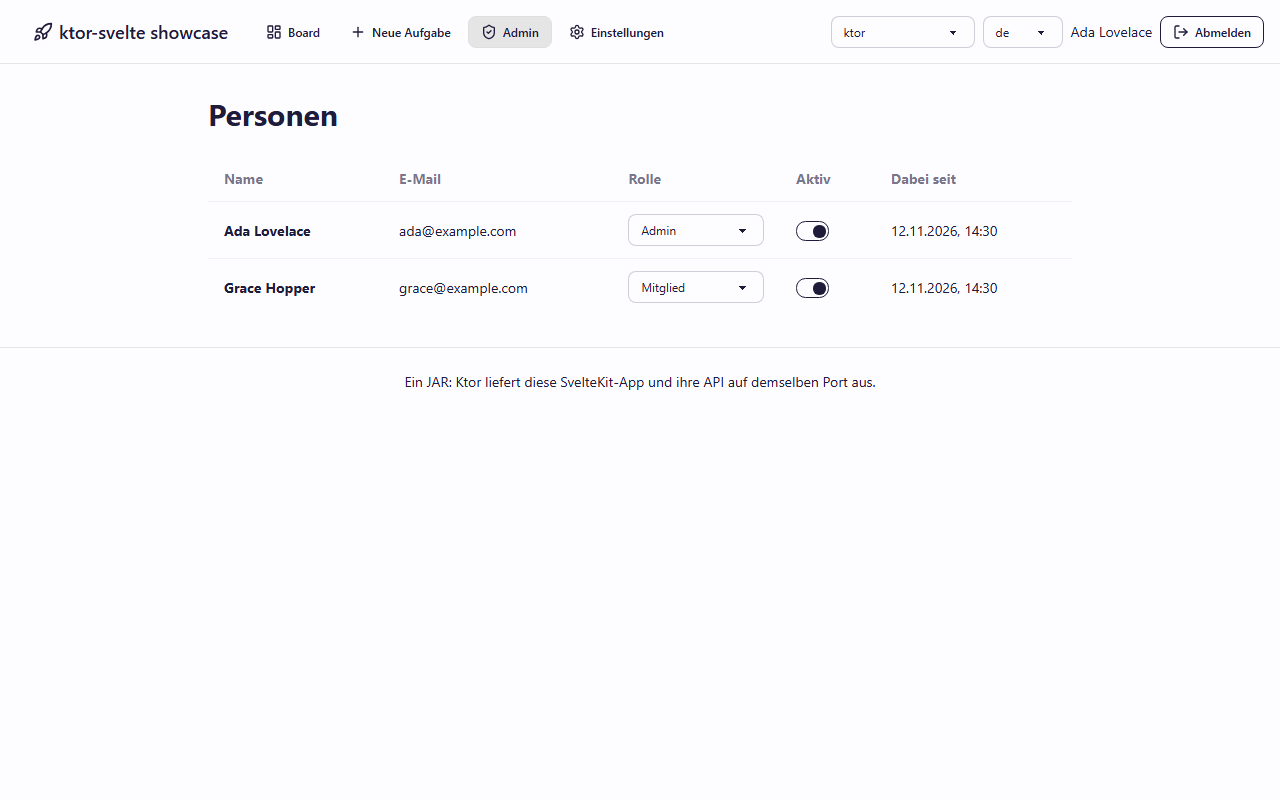
The pictures come from ./gradlew -p examples/showcase screenshots, so they show what the current code does.